
Technical lab · Public source code · demonstration project
Video processing pipeline
Video upload and asynchronous processing API.
- Node.js
- FFmpeg
- Redis
- PostgreSQL
- Docker
Challenge
Convert files to HLS without blocking HTTP requests.
My contribution
Backend demonstration project; it is not a production streaming product.
Architecture and approach
Two public repositories comprise the project: a Node.js API with PostgreSQL, Redis/Bull, and FFmpeg, plus a Vue 3/Pinia frontend. The API records video metadata and dispatches conversion jobs for asynchronous processing.
What was implemented
- The upload workflow validates metadata, creates a processing record, and submits the job to a queue, decoupling the response from transcoding cost.
- The processor reads dimensions and duration with FFprobe, prepares a thumbnail, and generates HLS playlists and segments at resolutions compatible with the input.
- Video status evolves with processing; paginated queries use a Redis cache and database records.
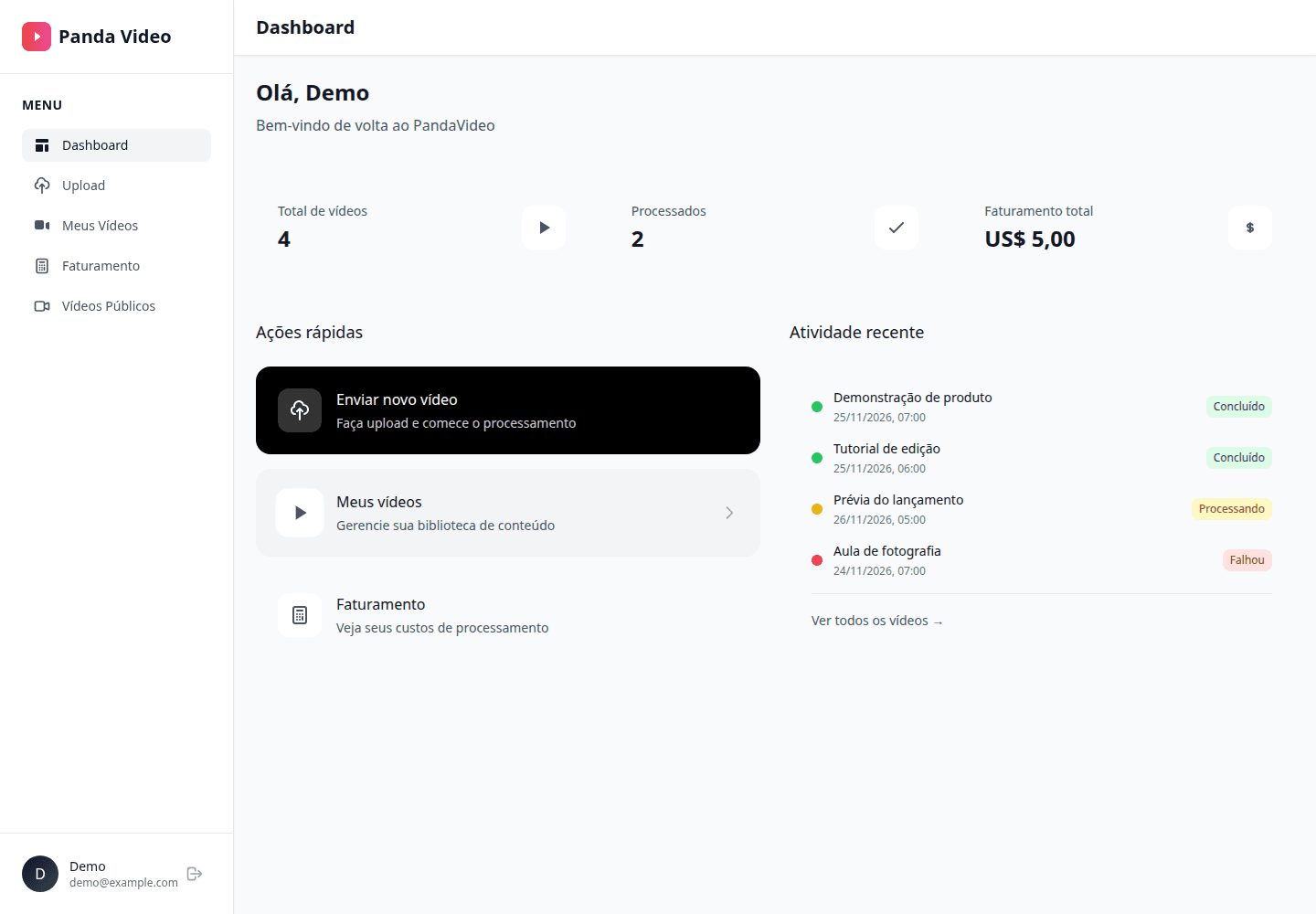
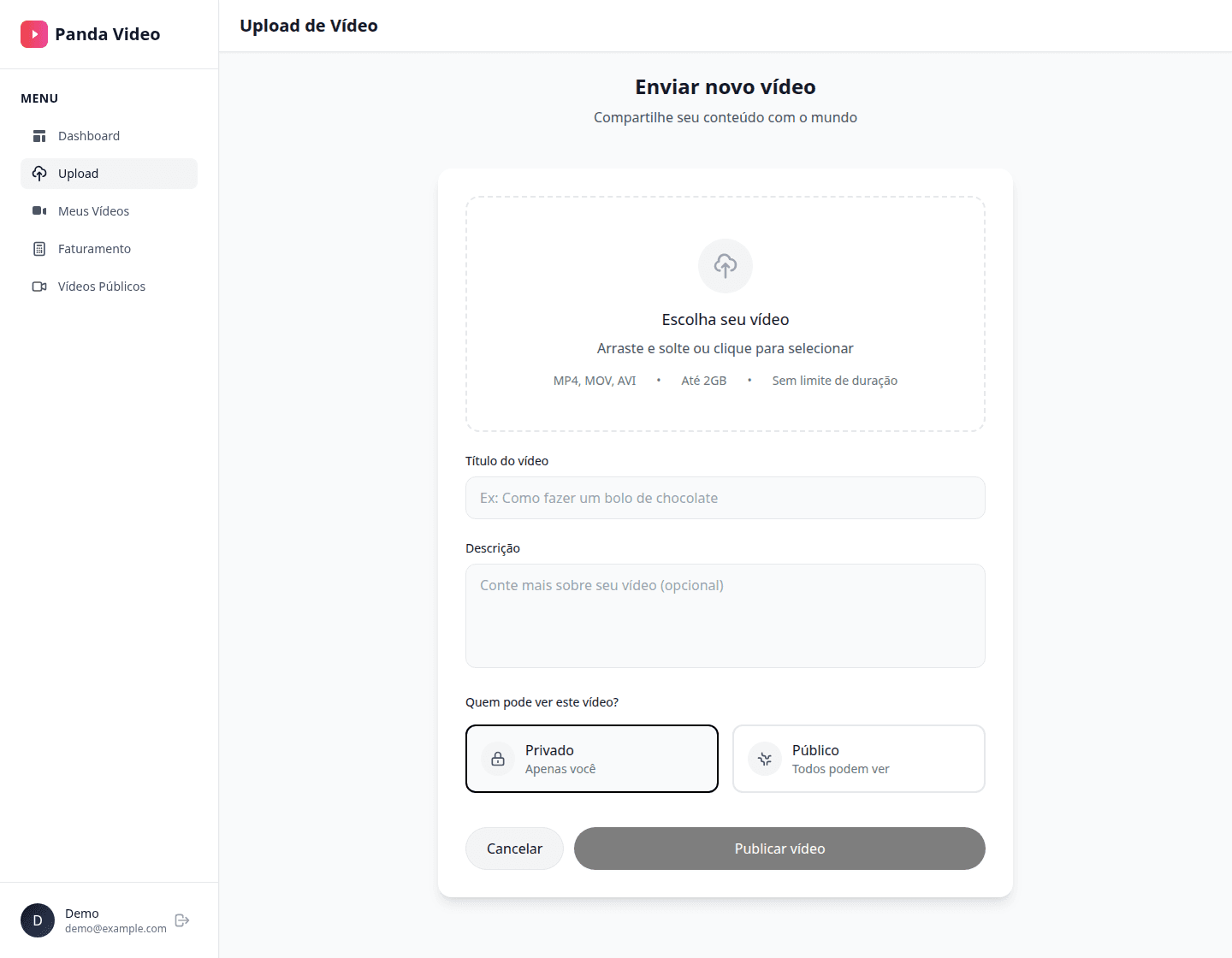
- The Vue frontend implements upload, processing, completed, and failed states; the billing service computes processed minutes and a sample charge.
Trade-offs and decisions
- Multiple HLS resolutions support varying connection conditions at the cost of additional CPU and storage.
- Queues decouple work and allow retries, but recovery and duplicate effects require dedicated validation.
- Caching can improve reads but requires consistent invalidation; the project has no validated benchmark. The billing service does not represent a real charge in the demo.
Validation and current status
The public Vue frontend was built and run locally with simulated API responses: the dashboard and upload form were captured. No file was uploaded, converted, or billed in the demo. The backend pipeline was inspected in source code; FFmpeg conversion, the real queue, and billing were not verified end to end.
Engineering decisions
- 01
Processing worker
Separate uploads from FFmpeg conversion to free the HTTP server.
- 02
Adaptive streaming
Use HLS as the output format instead of relying on the original file.
- 03
Queue and cache
Use Redis to coordinate processing and speed up queries.
Evidence and limitations
Public source code and README describe the HLS pipeline; no validated metrics at scale.
More project screenshots
Public references
Let's build something like this.
Tell me about your problem and we'll evaluate the best approach.
Get a quote